
requiem for originality
how to have a pov, part 1

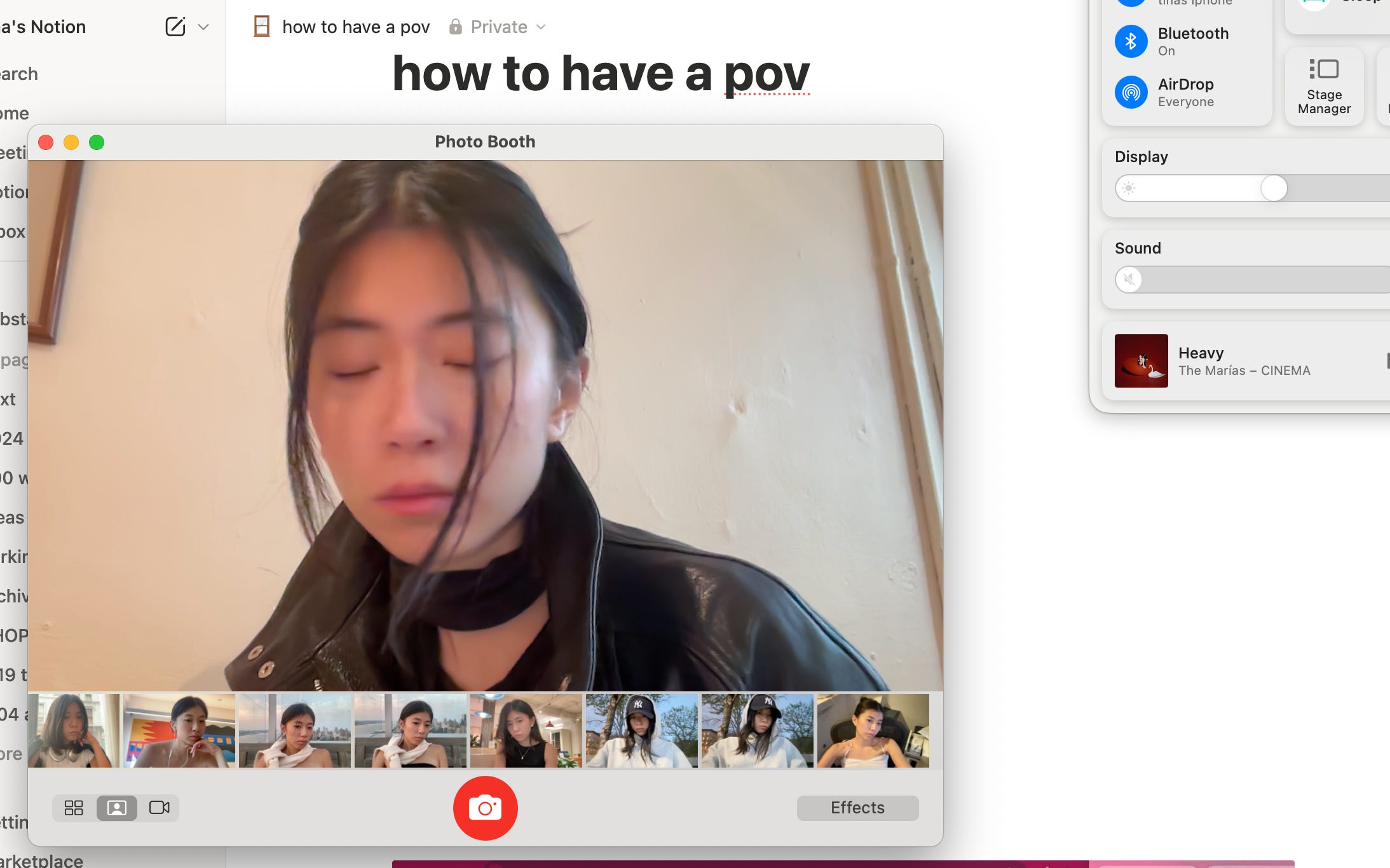
Earlier this year one of my own videos came across my feed. It was something I had thrown together in my living room with some light editing before hitting post. I didn’t think much of it until it hit my timeline a few weeks later and I watched it again: a familiar square of colour and motion illuminating my phone.
Except it wasn’t actually my video, but someone else’s content that was made in the exact same way. Same concept, same edits, and its creator was even wearing the same outfit. At the time, I was bewildered, and to be honest, offended (!!). But I complained emphatically to my friends and then promptly forgot about it. A few weeks later, this exact scenario happened again, and then a few more times after that.
✧✧✦
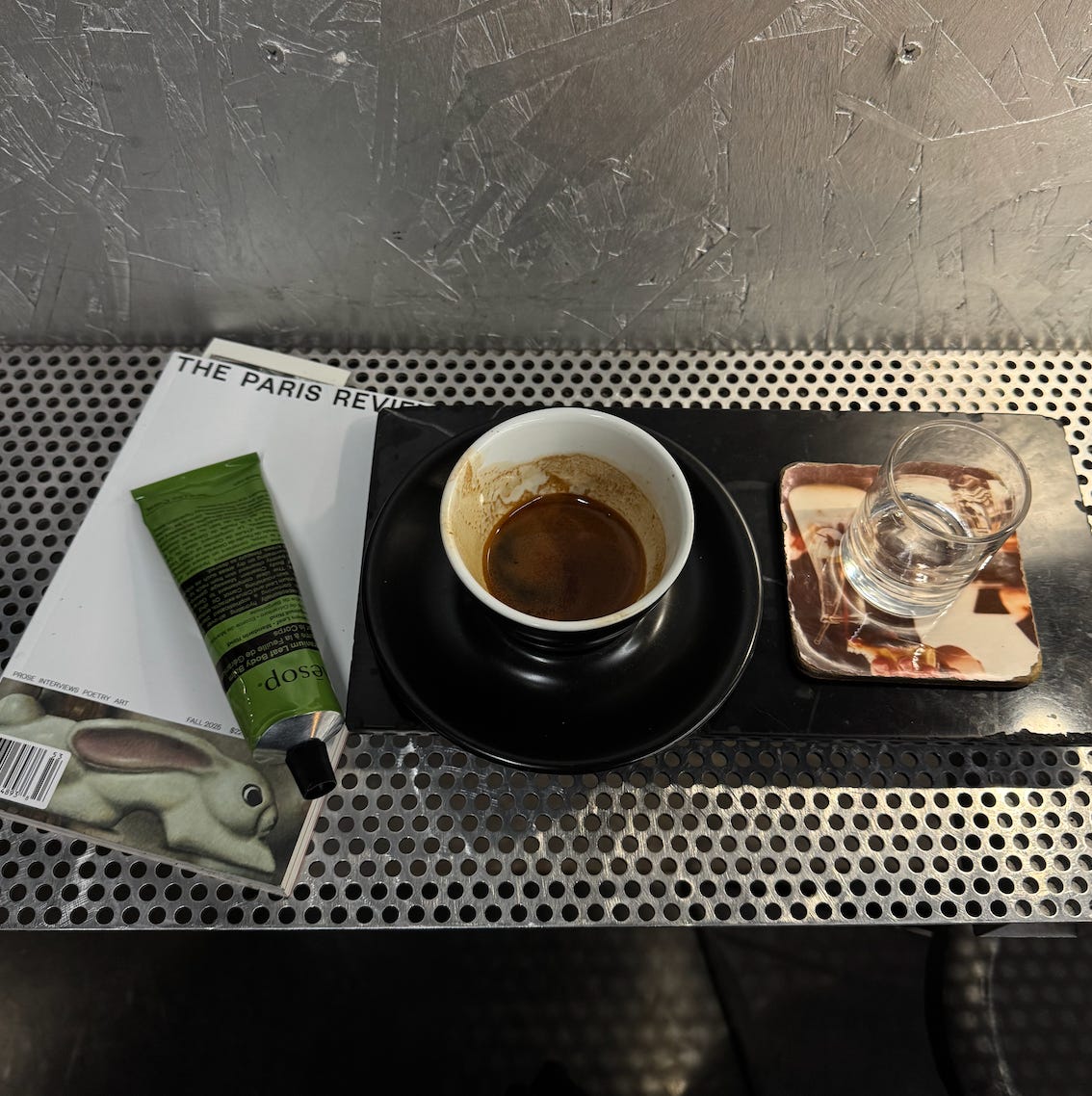
At coffee with Arden, we talk about the idea that everything online is starting to look the same. I confess my annoyance with seeing others online replicate my videos. It feels incredibly neurotic to bring up since no one else would really even know outside of me and the other person. But she touches on something even more unsettling: “What if they don’t even realize they’re replicating something”?
Earlier this year Claude (Anthropic’s foundational model) started partnering with creators to run ads, and all of the ads looked eerily similar: big bold fonts, cinematically shot, SF tech vibes. In a different corner of the internet there’s a specific high motion, retro-inspired look associated with “running” aesthetics and a restrained, low contrast one for the minimalist girls. At a certain point, the niche takes a life of its own, irrespective of any individual creator.
✧✦✧
There’s one thing about seeing a video and knowingly replicating it. But there’s a more scary thought that maybe my ideas actually aren’t that original in the first place.
What if everything I’m consuming in my day to day has led me to an idea that is easily reproduced by a million other people. Or something I thought I had come up with is in actuality something I consumed and then forgotten about. Are my ideas even mine anymore?
As I was brainstorming this substack post, I had a strike of inspiration to write about the idea of correctness and the need to legibly prove my intelligence. I’m smart and I need everyone to know it, I had written down in my notebook. I realized only afterwards, that this was the title of a substack I had read in passing 2 years ago and then had hallucinated it as an original idea.
✧✧✦
Earlier this year, I wrote an essay that posed the question if anyone had indeed “stayed weird”. Now that we’re rounding out 2025, I feel like we’ve lived through a year where the sameness started to come to a head.
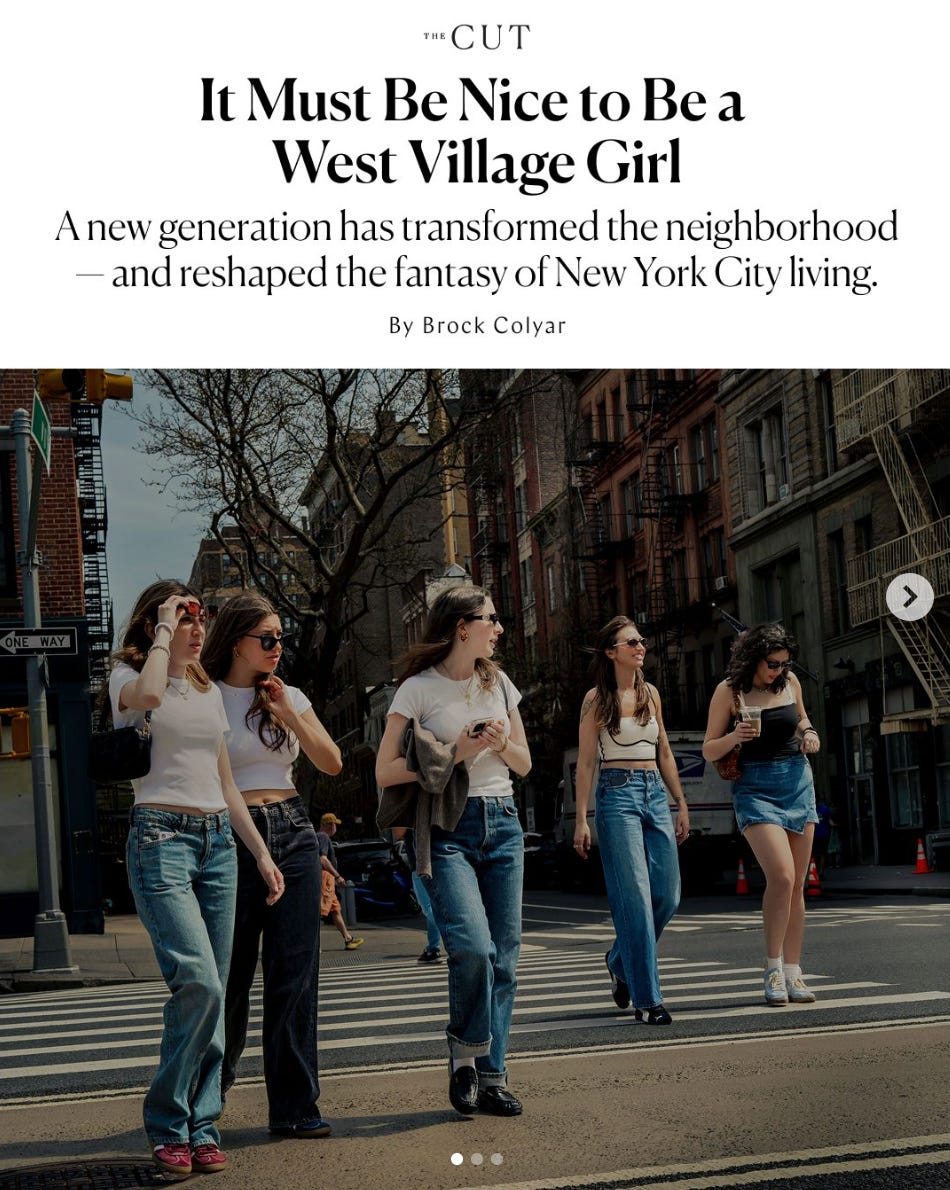
When The Cut’s West Village Girl essay came out, I found it a bit silly and somewhat blustering, but then a few weeks later I look up while walking in the WV, and there is a girl gang in the light wash jeans / white top combo. And admittedly, if I look down oftentimes I’m more or less in the same west village uniform. One of the critiques raised in the west village girl essay is that amongst this privileged circle, homogeneity is celebrated — going to the same restaurants, frequenting the same bars, wearing the same cult brands is a form of community.
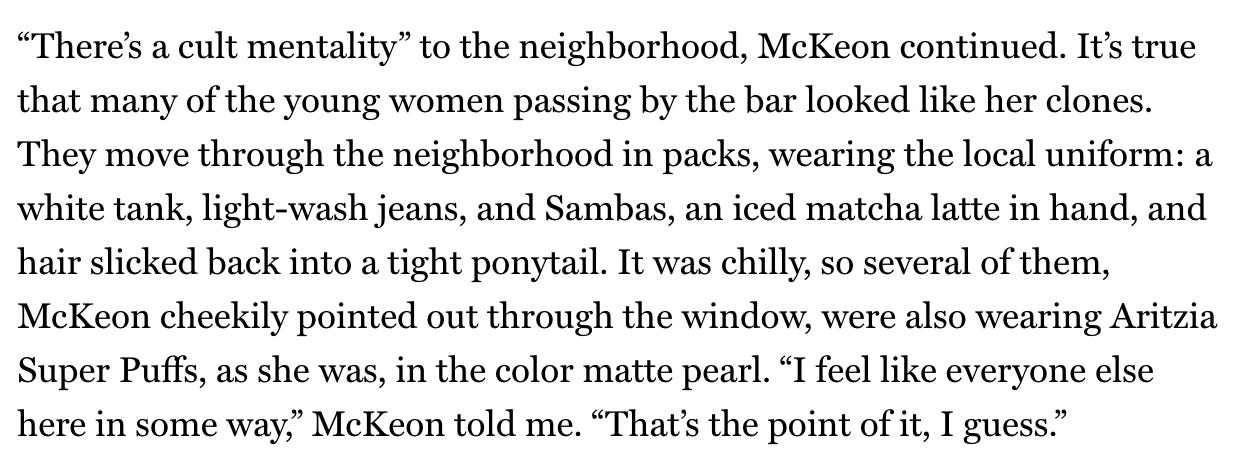
During this September’s fashion week, Rachel Tashjian put out the provocation that, “NYFW got boring”. As a lover of minimalism I had to sit with the idea, but to Tashjian’s point there are so many brands that seem to be catering to a very narrow profile — ostensibly a wealthy, intelligent women with an interesting job and discerning taste. It seems like all of a sudden, everyone has collectively decided that they have good taste (loose fabrics, clean cuts, monochromatic) and it becomes harder to distinguish one minimalist brand from the other.
✦✧✦
To be clear, I don’t think there’s anything wrong with anyone wanting to feel included or in enjoying what’s mainstream. When I first moved to the city, my office was near a city Target and I’d find any excuse to go just to walk down the aisles and feel some sense of comfort and familiarity. For many people, getting dressed is a utilitarian practice — one to feel good and to lessen the mental load.
But on a personal level, as someone with creative endeavors, I fear that nothing I say or do actually has any value because it’s so directly influenced by what is getting served to me on an algorithm and then co-opted by many other people that think the exact same way as me.
One of my hopes for 2026 is to consume less and articulate my POV more. There’s been so much personal taste discourse, but oftentimes the conversation implicitly revolves around how to have good taste which is part of the problem.
✦✦✧
The other day, I was reviewing someone’s work and my colleague made a comment that in a world of chatGPT, there’s no excuse for errors. While the tools that are available to us makes it easier to fact check, I worry that with this drive towards optimization (and in a culture that is increasingly punitive with criticism), we won’t have the opportunity to try things and be wrong about them.
When I used to work in investment banking, my favorite word was “precedent”. As in “can you please send me a precedent for this merger model/LBO/CSC”. The value of a precedent is the comfort and safety of something that is “correct” to guide how you think.
I’ve written before about the value in doing things that scare you and the idea that resistance and fear are signs that you’re on the right path. But I think there’s one step further, which is not just finding the courage to take the leap, but on the other side, feeling okay with the outcome even if you are wrong.
✦✦✦
In a conversation with Ezra Klein, Kyle Chaykla talks about how with algorithmic consumption, fewer things are “surprising” to us anymore: “Where we’re herded and shepherded toward experiences that were going to find comfortable enough, familiar enough, with just enough of the local flavor to make them not utterly boring and generic. “
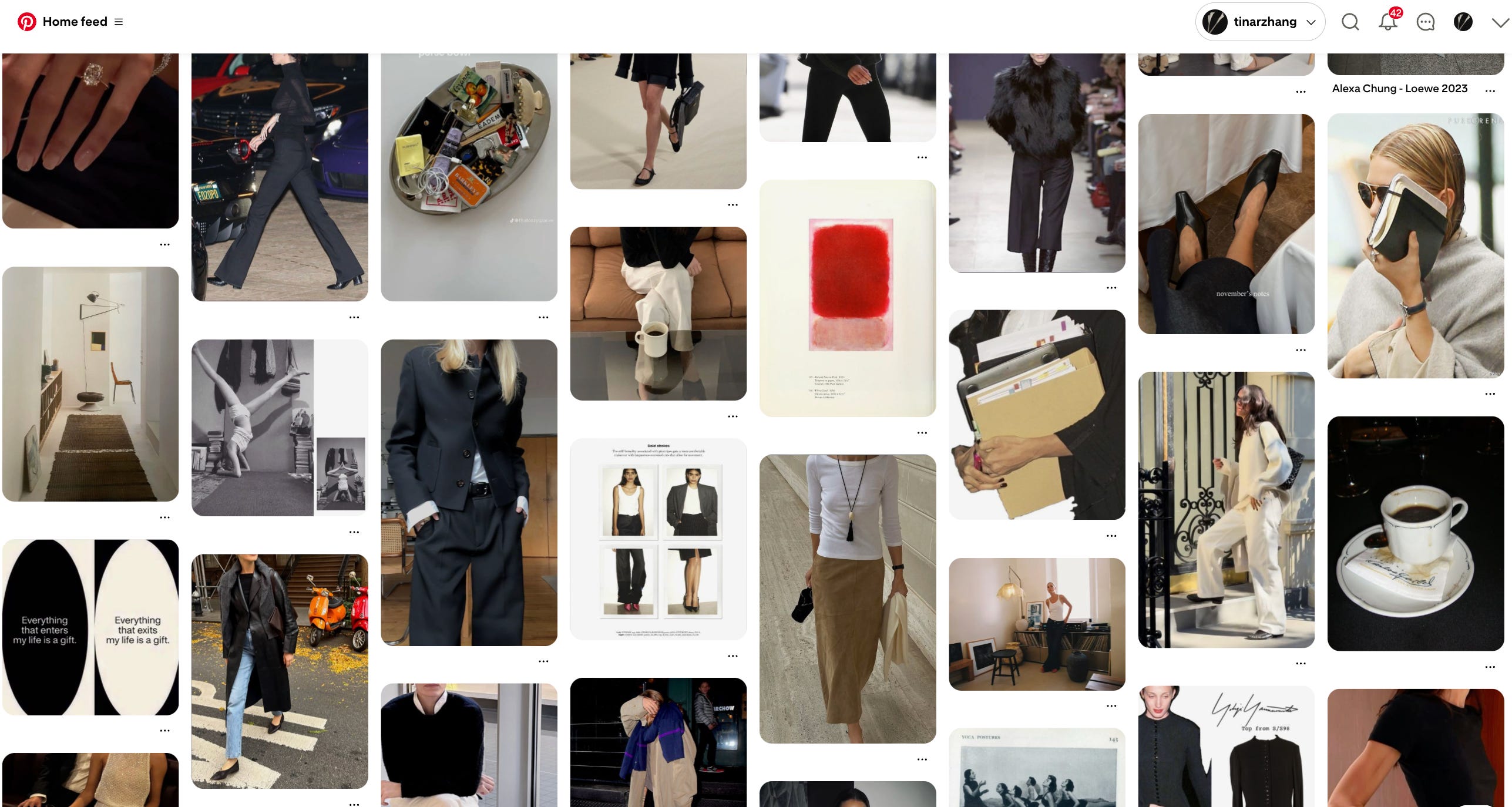
Sometimes I’ll open up my Pinterest board and my eyes will glaze over because the aesthetic feels so perfectly curated and expected that it all looks the same. Even the pieces that are meant to stand out are only one degree removed from something I’ve seen a million times before. What does it say about me if my exact “taste” can be perfectly summarized by an algorithm?
Some of the things that have shaped my taste the most are actually things that required struggle or that elicited a strong reaction in me or were an acquired taste over time. For weeks, I complained and moaned about endeavoring to read Anna Karenina this year, and months later I keep coming back to its themes of desire, self destruction and ambition. But of the thousands of pieces of short form content I consumed from an algorithm, I can probably name less than 10 off the top of my head.
This year, I want to expose myself to more things that are messy: art that is surprising, books that are mysterious, and to curate a life full of these strange, elusive and interesting experiences. This requires work — building a deeper bench of inspiration than what’s on your algorithm, the innate desire to understand what you like/dislike, the willingness to be wrong, and the ability to take it all in stride.
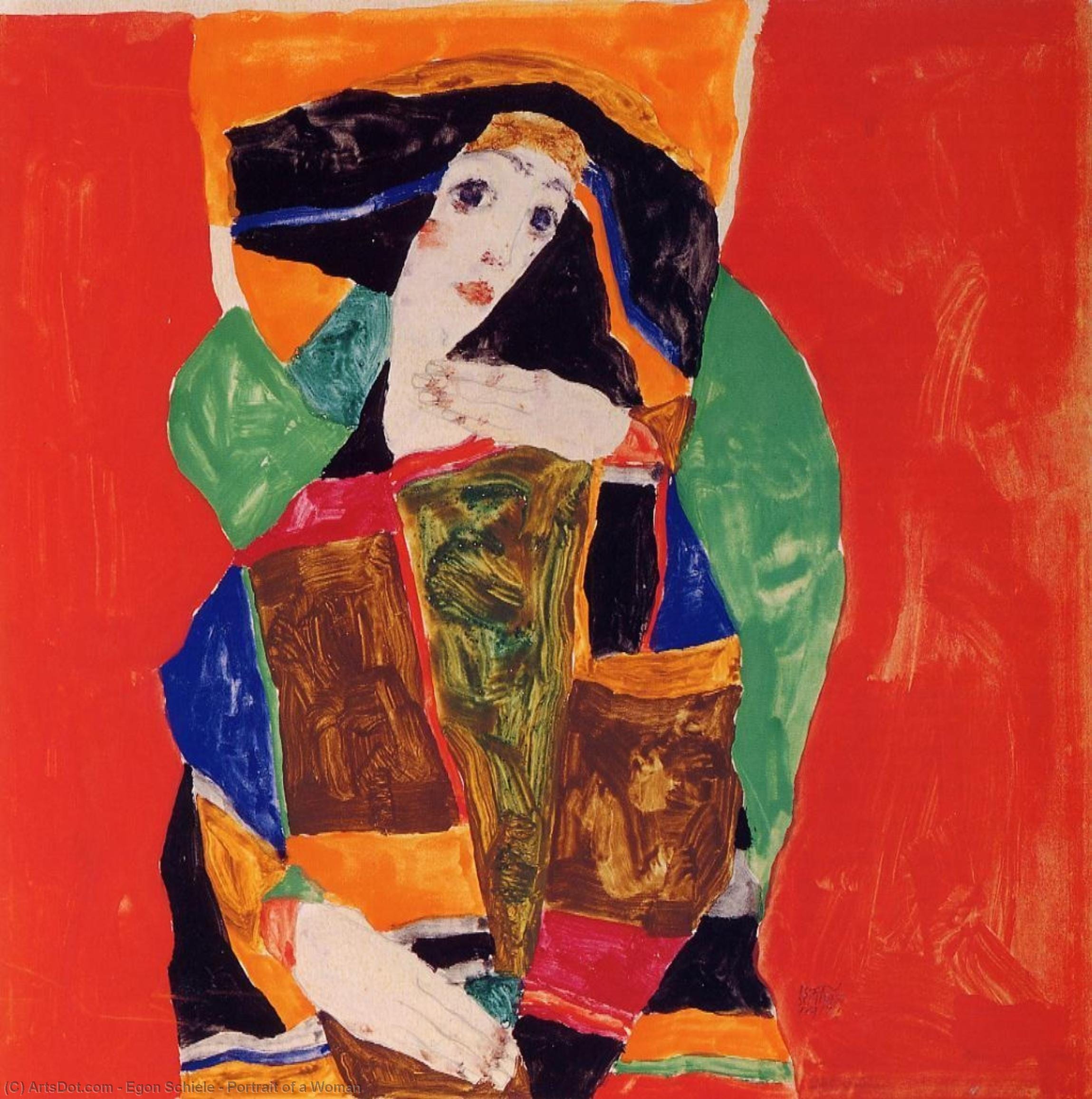
the idea that my personal taste can be summed up perfectly by an algorithm is so terrifying… 2026 mission is to confuse the algos 🫶
This reminds me of how the novel “Healing Resistance” introduced me to the word “cryptomnesia” where someone unconsciously remembers something and believes it’s an original idea. Happens so often!